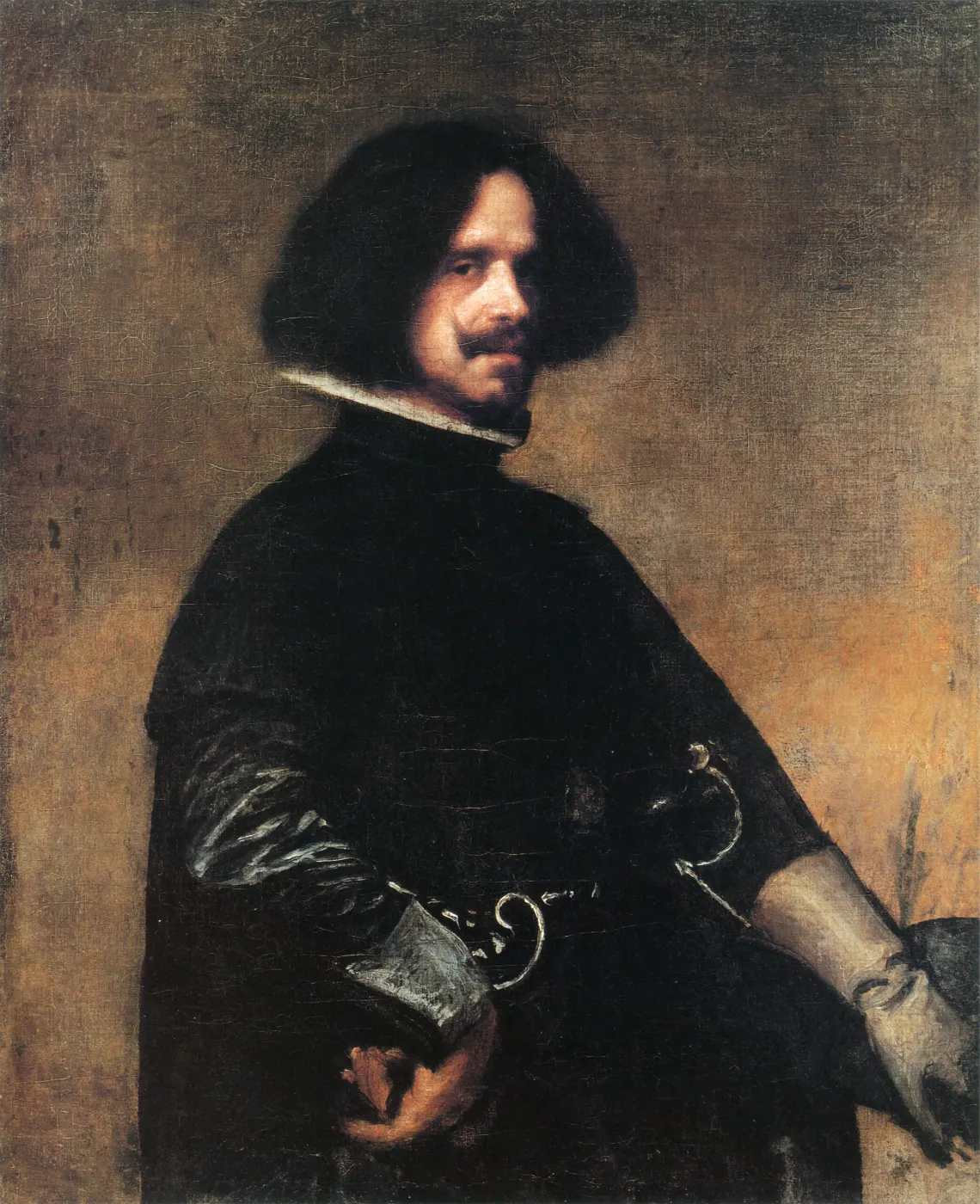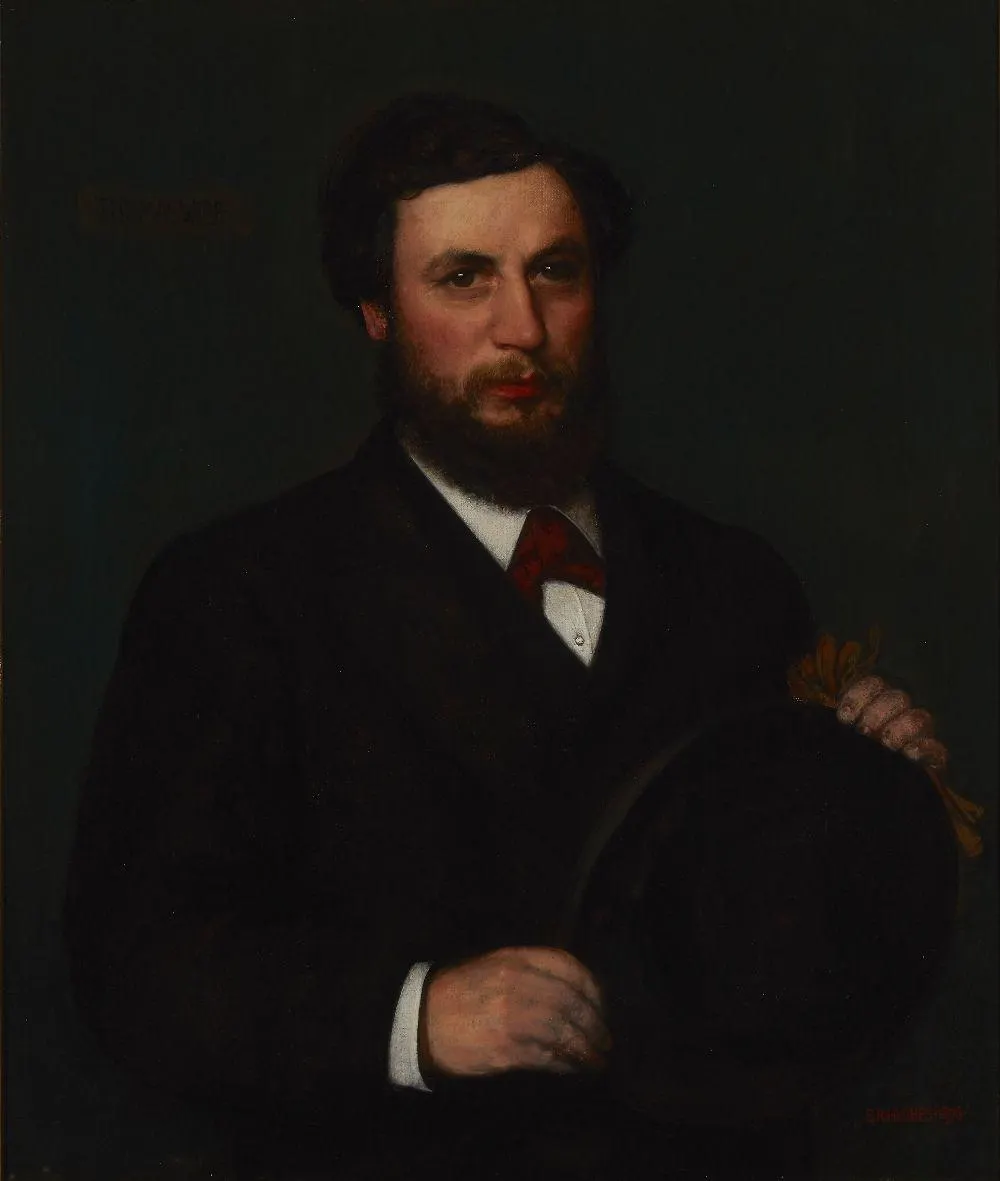
Édouard Manet (1832–1883) was one of the most influential and controversial figures in 19th-century French art. Born in Paris into a wealthy family, he was initially steered toward careers in law or the navy, but his interest in art prevailed. In the 1850s he trained in the studio of Thomas Couture, yet he soon moved away from academic painting, with its strict rules and idealized historical subjects.
The decisive turning point in his career was his desire to depict modern life directly, through close observation of the world around him.nnDuring the 1860s, Manet created works that caused a major stir in the Paris Salons. Paintings such as Le Déjeuner sur l’herbe (Luncheon on the Grass, 1863) and Olympia (1863) were sharply criticized because they challenged conventional ideas of the nude and of composition.
Today, however, these works are regarded as foundational to the birth of modern painting. Manet’s figures are often built from open planes, strong contrasts of light and shadow, and direct gazes that create a tense relationship with the viewer. In this way, he became a bridge between Realism and Impressionism.nnThe 1860s and 1870s were especially important in his career.
In these years he produced works such as La Musique aux Tuileries, The Fifer, The Railway, and Bar at the Folies-Bergère, all of which explore modern Parisian life, urban leisure culture, and the solitude of the modern individual. Manet was close to the painters associated with plein-air practice and developed friendships with Claude Monet, Edgar Degas, Pierre-Auguste Renoir, and others.
Yet he never fully took part in the Impressionist exhibitions, even though he deeply influenced their innovative vision.nnManet’s painting is marked by an emphasis on surface, sharp brushwork, and the impression of immediacy rather than traditional modeling. In his portraits, he aimed to capture the psychological presence of his contemporaries; in still lifes, he created restrained but powerful visual arrangements.
His admiration for Spanish art, especially for Velázquez and Goya, enriched his sense of color and composition. In the 1870s, the Franco-Prussian War and the Paris Commune affected both his life and his work; during this period he also produced smaller, more introspective paintings.nnDespite worsening health in his final years, he continued to work. In 1881 he received Le Grand Prix de l’Exposition Universelle, and in 1882 Olympia was acquired by the French state, bringing him belated official recognition.
He died in 1883 at the age of 51. Édouard Manet played a decisive role in the development of both Realism and Impressionism, building a bridge between academic painting and modern art. His bold subjects, focus on contemporary life, and innovations in pictorial surface made him one of the pioneers of modern art.